
How do I perform a risk analysis? - With example
Heading 1
Heading 2
Heading 3
Heading 4
Heading 5
Heading 6
Lorem ipsum by sit amet, consectetur adipiscing elit, sed do eusmod tempor incididunt ut labore et dolore magna aliqua. Ut enim ad minim veniam, quis nostrud exercitation ullamco laboris nisi ut aliquip ex ea commodo consequat. Dis aute irure door in reprehenderit in voluptate velit se cillum dolore eu fugiat nulla pariatur.
Block quote
Ordered list
- Item 1
- Item 2
- Item 3
Unordered list
- Item A
- Item B
- Item C
Bold text
Emphasis
Superscript
Subscript


Heading 1
Heading 2
Heading 3
Heading 4
Heading 5
Heading 6
Lorem ipsum by sit amet, consectetur adipiscing elit, sed do eusmod tempor incididunt ut labore et dolore magna aliqua. Ut enim ad minim veniam, quis nostrud exercitation ullamco laboris nisi ut aliquip ex ea commodo consequat. Dis aute irure door in reprehenderit in voluptate velit se cillum dolore eu fugiat nulla pariatur.
Block quote
Ordered list
- Item 1
- Item 2
- Item 3
Unordered list
- Item A
- Item B
- Item C
Bold text
Emphasis
Superscript
Subscript

What is a risk analysis?
In short, risk analysis is the process of identifying, assessing, and prioritizing risks that may affect an organization's goals. It is an important part of risk management and helps organizations take proactive action against potential threats. By systematically analyzing risks, companies can be better prepared for unforeseen events and minimize their impact. We explain how to systematically analyse risks in this way.
The role of risk analysis within the ISO standards
ISO standards, such as the ISO 27001 (information security), among other things, provide a framework for effectively managing risks within organizations. These standards recognize the importance of risk analysis as an integral part of risk management. These standards provide a clear roadmap for systematically identifying, evaluating and managing risks. This helps organizations achieve their goals more effectively and minimize uncertainties.
An example of a risk analysis
Suppose a company wants to carry out a risk analysis in the context of information security. In this example, we assume the risk of phishing attacks. In a risk analysis, you first assess how likely it is that your organization will be the target of such an attack. Next, you look at its possible impact, such as financial damage or reputational damage. Ultimately, you'll come up with measures to mitigate this risk, such as informing your staff about how to recognize phishing attempts and establishing strong technical controls.
How to analyse a risk
An effective risk analysis follows a structured approach. You can analyse a risk in the following way:
- Identification of risks
Organize a brainstorm to identify any potential risks that could affect your project or business.
- Risk assessment
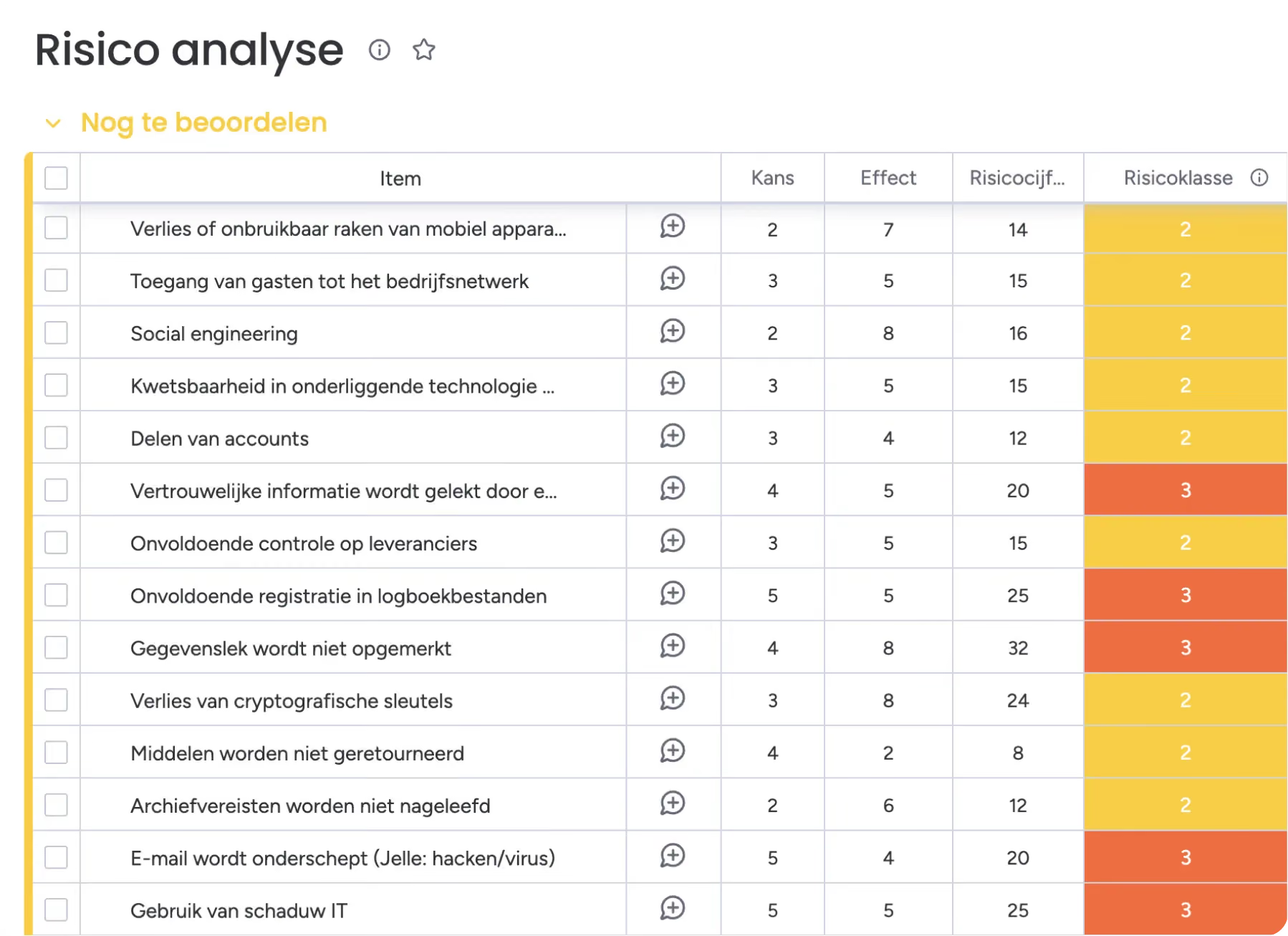
Evaluate the likelihood (how often it can happen) and impact (possible consequences) of each risk. Do this, for example, by assigning a number of 1-10 for the probability and impact.
- Prioritizing risks
Rank the risks based on their assessed likelihood and impact. A handy formula for this is “probability/chance x impact”. The higher the number, the greater the risk.
- Risk Management Measures
Develop measures to control or mitigate (highly prioritized) risks.
- Monitoring and review
Monitor the risks and effectiveness of the control measures regularly.
How we can help
At Fendix, we understand the complexity and importance of effective risk analysis within the ISO standards. We can guide your organization in implementing ISO standards, from carrying out a thorough risk analysis to developing a complete management system. Does this sound like something to you? Then feel free to contact join us!




.avif)